


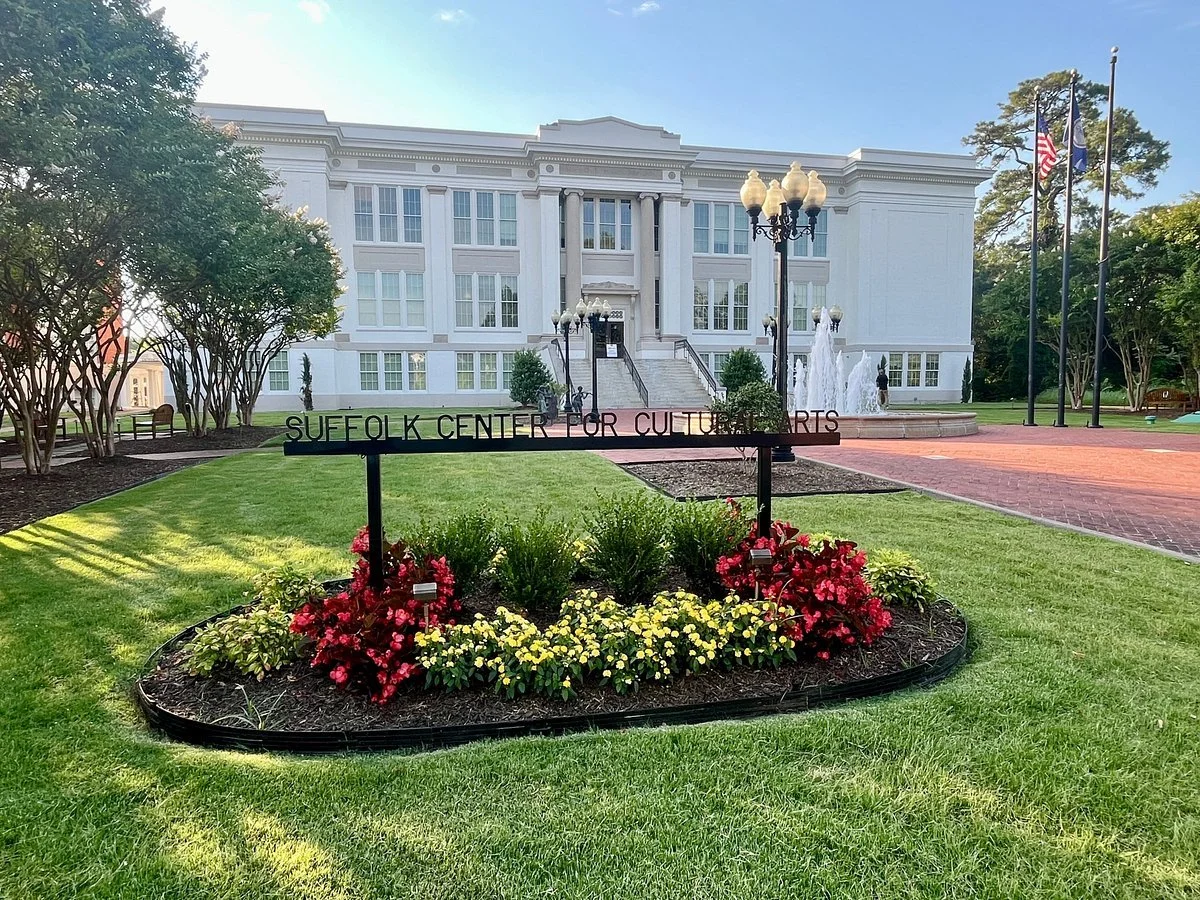
A place where a night out in Suffolk begins and ends.
The Suffolk Center for Cultural Arts is seeking conversations with experienced restaurant owners and hospitality groups about the vacant restaurant space inside the Center. The space includes a full kitchen. A previous restaurant operated under a lease, and we are open to discussing an arrangement that works for both a new operator and the Center.
We envision a restaurant or lounge with an identity of its own: a place Suffolk residents choose for dinner, drinks, and time together, whether or not they are attending a show. An elevated cocktail lounge or jazz-inspired setting is one possibility, but we welcome a partner’s ideas. We see opportunities for pre-show dining, post-show nightcaps, and, when an event allows, experiences coordinated with performers.
Catering is central to the conversation. The Center hosts performances, receptions, private celebrations, and special events throughout the year. Its Art of Wine dinners, for example, pair food and wine with works of art and call for creative menus. With an active upcoming calendar, we need a partner who can plan closely with our operations team and provide dependable service across different kinds of events.
We are open to a single operator running the restaurant and catering Center events. We would also consider an approach that brings in other catering partners when an event calls for additional capacity or a different specialty. Rent, event revenue sharing, and beverage service would be part of the discussion. The Center currently manages alcohol sales.
We hope to find a partner with restaurant experience, a clear concept, strong event execution, and an interest in building something lasting in downtown Suffolk.
Let’s start a conversation. If you own or operate a restaurant, catering company, or hospitality group, contact [name] at [email address]. Tell us about your team, your concept, and how you would approach daily service and the Center’s event calendar. We would be glad to arrange a conversation or site visit.

*Kitchen and dining room highlighted in yellow.
Restaurant Partner Search
Internal Working Brief for the Suffolk Center for Cultural Arts
The Suffolk Center for Cultural Arts is looking for a restaurant partner who can operate an independent dining concept within the Center while providing dependable catering for performances and special events. This brief captures our vision, what we know from the initial discussion, and the questions we need to answer as we search.
Our Goal
The Center has a vacant restaurant space with a full kitchen. A previous restaurant operated there under a lease. The space is currently operating at a loss, so a new arrangement must first make it financially sustainable.
Beyond covering costs, we want a partner who helps make the Center a destination. The restaurant should give Suffolk residents a reason to dine locally and have an identity that attracts customers even when there is no performance or event.
The Restaurant We Envision
We discussed the possibility of a professional, elevated cocktail lounge, a martini bar, or a New York–style jazz club. These are starting points for conversation, not requirements. We want to hear what an experienced operator believes would work in the space and in the Suffolk market.
The restaurant could offer dinner before a show and a place for guests to gather afterward for a drink or dessert. Some events might also create opportunities for special menus or performer meet-and-greets, subject to the Center’s and performers’ approval.
The concept must work as an independent business. Attendance at Center events can support it, but the operator needs a plan to bring in customers throughout the week.
Catering Is Central to the Partnership
The Center’s calendar includes performances, receptions, private celebrations, and special events. The restaurant partner must be able to work with that calendar and provide food service that matches the occasion.
Art of Wine dinners are one example. These experiences pair food and wine with works of art and require creative menus, careful planning, and close collaboration with the Center.
The upcoming season is already heavily booked. Kathy, the Center’s operations director, and the selected partner will need a shared calendar for events, restaurant service, preparation, and staffing. We need to determine which events require guaranteed catering and when food service must be confirmed so those events can be marketed accurately.
What We Know About Past Arrangements
The previous restaurant operated under a lease. The Center has also received approximately $30,000 through profit sharing with past restaurant partners. The meeting notes reference amounts ranging from $1,400 to $3,700 per event.
Before using these figures in a proposal or financial forecast, we need to confirm their time periods, how they were calculated, what expenses were included, and what the per-event amounts represent. They are historical discussion points, not guaranteed income for a future partner.
Partnership Models to Explore
One restaurant and catering operator. A single partner would run the restaurant and provide catering for Center events. This could create a consistent guest experience and a clear point of responsibility. We would need to confirm that the operator has enough staff and capacity to cover the event calendar.
A restaurant operator with additional catering partners. One operator would run the daily restaurant, while approved caterers could help with certain events, larger groups, or specialty menus. This would require clear rules for scheduling, kitchen access, cleanup, and which partner serves each event.
A catering partner roster while the restaurant search continues. If we cannot secure a restaurant operator in time for the upcoming season, approved catering vendors could provide interim event coverage.
We have not selected an operating model. Candidates should be invited to explain which approach they can execute and why.
Financial Questions to Resolve
The Center’s immediate financial goal is to stop losing money on the restaurant space. We should calculate its current monthly cost, then establish the minimum financial result an agreement must produce.
A lease, a rent-plus-percentage arrangement, or another structure could be considered. Any comparison should account for the Center’s actual net result after utilities, maintenance, equipment, staffing, and oversight costs—not just the proposed rent or revenue share.
For each serious proposal, we should compare a slow month, a typical month, and an event-heavy month. We should also test what happens when an event is canceled or regular restaurant traffic is lower than forecast.
Alcohol Sales Require a Separate Decision
The Center currently manages alcohol sales and considers them a significant source of revenue. A restaurant operator may view beverage sales as essential to making its concept profitable.
We need to understand the Center’s current net proceeds from alcohol sales and discuss arrangements that could work for both parties. Those conversations should address who manages service, staffing, inventory, pricing, payments, and revenue for daily restaurant operations and Center events. Any proposed arrangement must be reviewed for applicable licensing and legal requirements before it becomes part of an agreement.
The Partner We Should Seek
A strong candidate should bring:
Experience operating a restaurant or comparable hospitality venue
A distinct concept with a clear audience and pricing strategy
A credible plan for attracting customers beyond Center event attendees
Proven catering or event service experience
Enough management and staffing capacity to serve both the restaurant and scheduled events
Financial capacity to open and sustain the operation
A willingness to plan closely with the Center’s operations team
Strong references and a record of dependable service
The right partner should see the Center’s arts programming as an opportunity while respecting the Center’s event commitments and mission.
What We Need to Prepare Before Outreach
We should assemble one consistent information packet for serious candidates. It should include:
A floor plan and description of the available restaurant and kitchen space
An equipment inventory, including condition and ownership
Available seating, storage, loading, parking, signage, and access information
Known repair or improvement needs
A calendar of confirmed and tentative events
Event types, estimated attendance, and expected catering needs
Verified historical financial information that the Center chooses to share
The Center’s expectations for scheduling and event coordination
The search team should also agree on who can answer candidate questions, who evaluates proposals, and who has authority to negotiate and approve an agreement.
Questions to Ask Prospective Partners
Restaurant Concept
What would you call and position this restaurant?
Why would someone visit on a day when the Center has no event?
What menu, price range, atmosphere, and hours do you envision?
How would you serve guests before a performance and encourage them to return afterward?
How would you market the restaurant independently and in collaboration with the Center?
Catering and Events
Which types and sizes of Center events can you reliably serve?
How far in advance would you need event details?
How would you develop menus for an experience such as an Art of Wine dinner?
How would you handle quotes, deposits, final guest counts, dietary needs, and cancellations?
What backup plan would you have if key staff were unavailable on an event date?
Operations and Finances
Who would manage this location day to day?
What staffing and improvements would be needed before opening?
What investment would you make, and what would you need from the Center?
What financial arrangement could your business support?
How would you approach alcohol service and revenue?
What information would you share with the Center each month?
How We Should Compare Candidates
We should assess more than the appeal of a concept. The leading candidates need to show that they can run a restaurant, fulfill event commitments, and produce a workable financial result for both parties.
The proposed evaluation priorities are:
Event and catering capability: 25%
Strength of the independent restaurant concept: 20%
Financial value to the Center: 20%
Guest experience and fit with the Center: 15%
Ability to open and operate successfully: 10%
Collaboration and communication: 10%
For finalists, we should request a sample event plan, an operating forecast, a proposed financial arrangement, and relevant references.
Decisions We Still Need to Make
Before issuing a formal opportunity, the Center should answer these questions:
What financial result would make the restaurant space sustainable?
Which upcoming events must have confirmed catering, and by what dates?
Must one partner serve all events, or can outside caterers participate?
What access and priority will Center events have in the restaurant and kitchen?
What alcohol service and revenue arrangements are feasible?
What repairs or equipment work must happen before opening?
What is the latest date we can select a partner without disrupting season marketing?
Who has final authority to approve the concept and agreement?
Immediate Next Step
Our first step is to confirm the event calendar, current cost of the vacant space, equipment condition, and historical financial figures. With those facts in hand, we can approach qualified restaurant groups, invite their ideas, and compare proposals against the same expectations.
Kitchen Details
(Content to come from Dr. Thomas Yannuzzi)